 Previous |
  Home
Home
Section: New Results
Nonlinear dynamics and Mild Therapeutic Hypothermia (MTH)
Participants : Binbin Xu [correspondant], Oriol Pont, Hussein Yahia, Ihu Liryc.
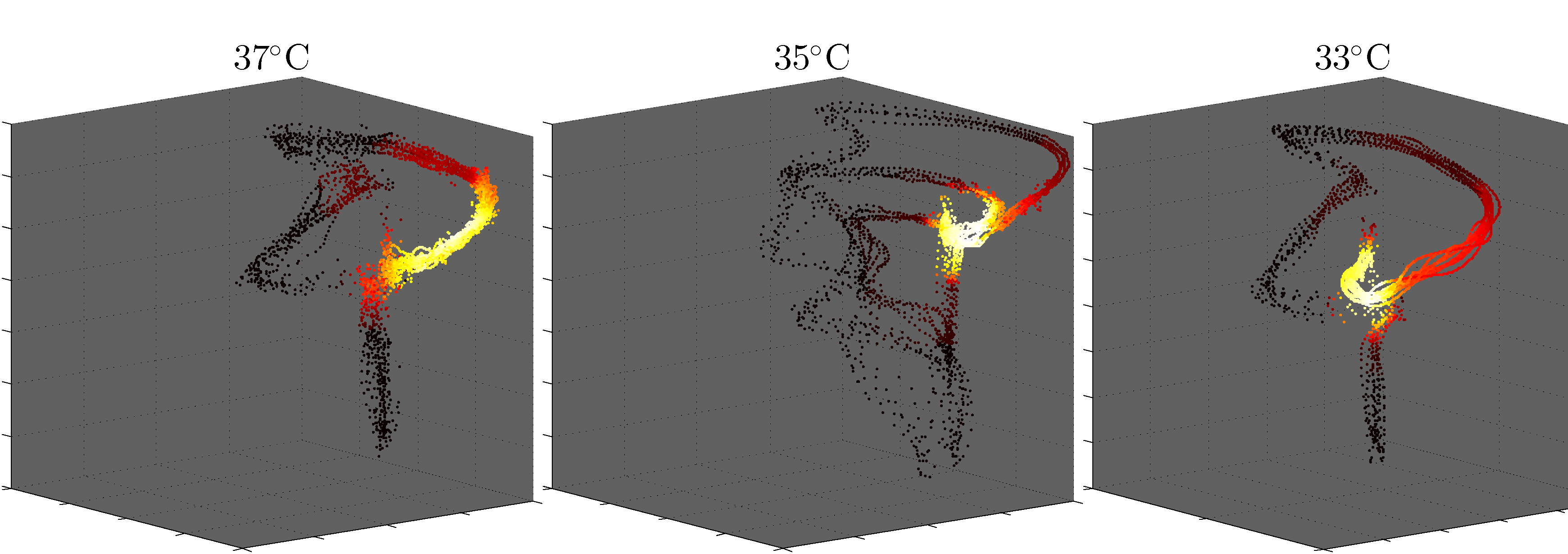
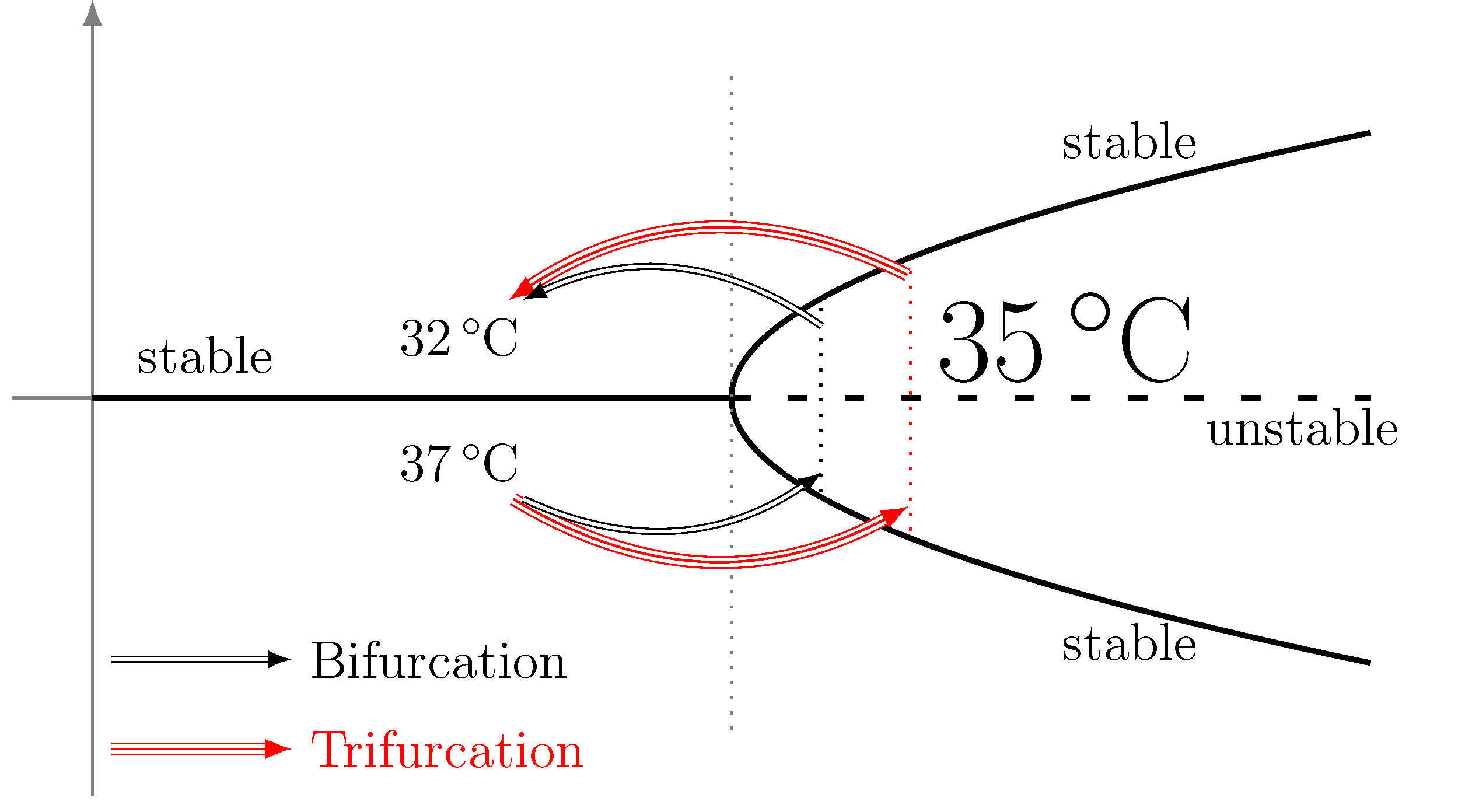
The neurological damage after cardiac arrest constitutes a big challenge of hospital discharge. The mild therapeutic hypothermia (MTH) (34 - 32) has shown its benefit to reduce this type of damage. However, it can have many adverse effects, among which the cardiac-arrhythmia-generation-a-posteriori (CAGP) can represent up to . So it's important to understand the mechanism of CAGP in order to improve this therapy. Our study with a cardiac culture in vitro showed that at 35 the CAGP can be induced. Spiral waves, commonly considered as a sign of cardiac arrhythmia, are observed. The process of MTH can be represented by a Pitchfork bifurcation, which could explain the different ratio of arrhythmia among the adverse effects after this therapy. This nonlinear dynamics suggests that a variable speed of cooling / rewarming, especially when passing 35, would help to decrease the ratio of post-hypothermia arrhythmia and then improve the hospital output. See figures 5 , 6 .